Ready Master
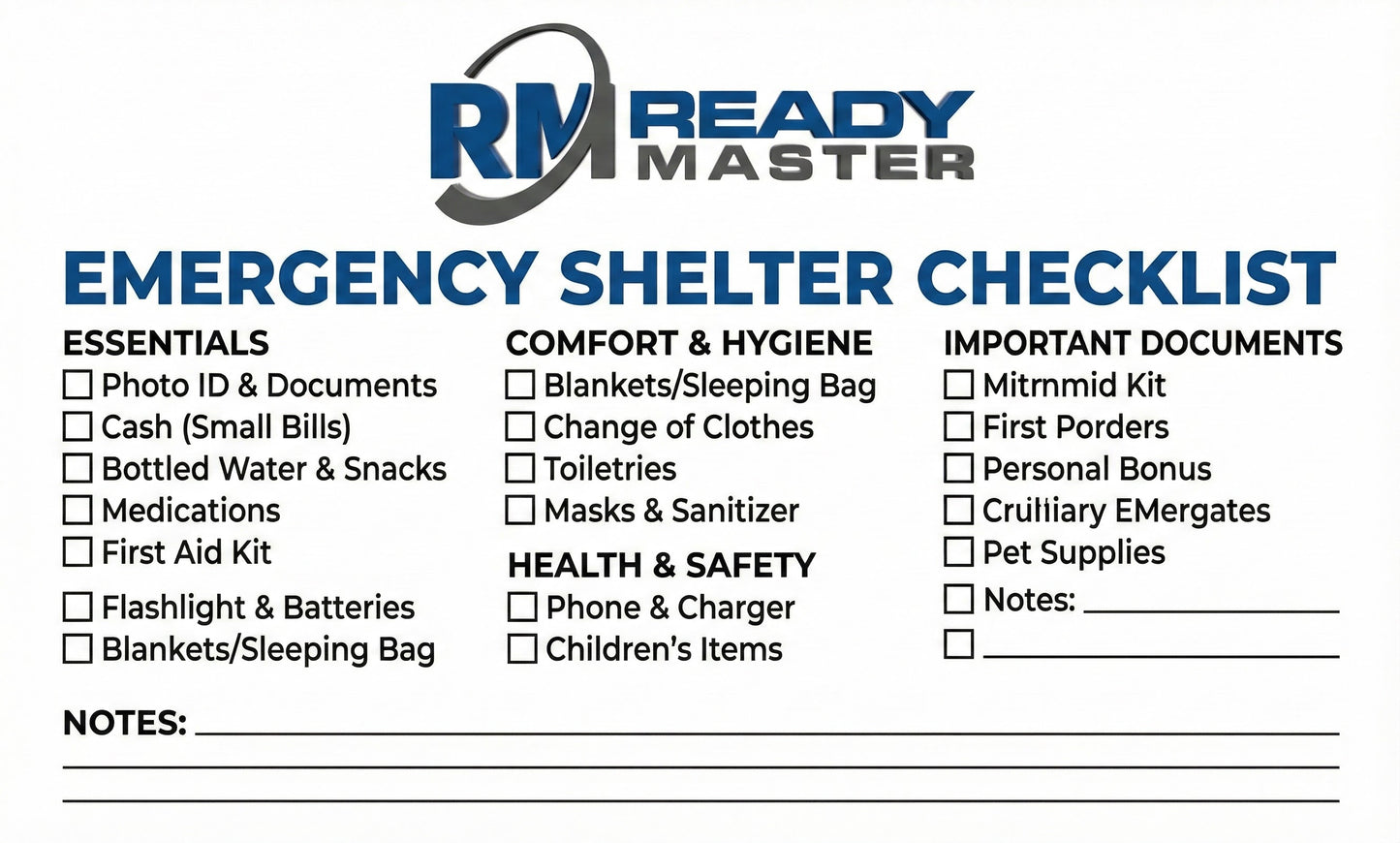
Emergency Shelter Checklist
Emergency Shelter Checklist
Couldn't load pickup availability
This is a practical, calm, and real-world emergency shelter checklist—a kind of go-bag companion for when circumstances uproot you and you need to ride out the storm in a public shelter. Think of it as a small constellation of comfort, security, and continuity, carried in a single bag. No theatrics—just grounded, sensible preparedness.
Items included:
Below is a practical, calm, and real-world emergency shelter checklist—a kind of go-bag companion for when circumstances uproot you and you need to ride out the storm in a public shelter. Think of it as a small constellation of comfort, security, and continuity, carried in a single bag. No theatrics—just grounded, sensible preparedness.
Emergency Shelter Readiness Checklist
A practical packing list for comfort, security, hygiene & communication during displacement
1. Identification & Critical Documents
These are the “keys” to your life’s infrastructure—compact but powerful.
-
Government ID (driver’s license, passport)
-
Copies of insurance policies (home, auto, health)
-
Emergency contact list printed + inside your phone
-
Medical records, prescriptions (physical + digital)
-
Proof of residence (utility bill, lease, deed)
-
Cash in small denominations
-
USB drive with important documents
-
Photos of family members & pets (for reunification if separated)
2. Medications & Health Essentials
A temporary shelter shifts routines; bring the items that keep your body steady.
-
Prescription medications (2–4 weeks if possible)
-
OTC pain relievers (acetaminophen/ibuprofen)
-
Antihistamines
-
Anti-diarrheal + electrolyte powder
-
Inhalers (if needed)
-
EpiPen (if applicable)
-
Daily vitamins
-
Spare glasses/contacts + lens solution
-
Masks (N95 preferred)
-
Small first-aid kit:
-
Bandages, gauze, tape
-
Antiseptic wipes
-
Antibiotic ointment
-
Blister care
-
Tweezers, small scissors
-
3. Personal Hygiene & Cleaning
Shelters are shared environments. Comfort is a matter of maintaining a small bubble of normalcy.
-
Toothbrush + toothpaste
-
Deodorant
-
Travel soap or body wash
-
Shampoo/conditioner (travel bottles)
-
Hand sanitizer
-
Disinfecting wipes
-
Brush/comb
-
Quick-dry towel
-
Feminine hygiene supplies
-
Nail clippers
-
Flip-flops / shower sandals
-
Laundry detergent sheets or pods
-
Small trash bags
4. Shelter Comfort Items
Create a sense of “home base” even in a gymnasium or convention center.
-
Compact sleeping bag or insulated blanket
-
Lightweight sleeping pad / inflatable camp pad
-
Travel pillow
-
Earplugs + eye mask
-
Change of clothes (2–3 sets)
-
Warm layers (hoodie, thermal top)
-
Extra socks + underwear
-
Compact blanket or shawl
-
Compression sack to keep it all small
5. Food & Hydration
Shelters often provide food, but it’s rarely a gourmet or tailored experience. Backup snacks help maintain energy and mood.
-
Refillable water bottle
-
Collapsible water container
-
Shelf-stable snacks:
-
Protein bars
-
Trail mix
-
Peanut butter packets
-
Instant oatmeal
-
Electrolyte tablets
-
-
Lightweight mess kit (spoon/spork, cup, bowl)
6. Communication & Power
Information is oxygen in emergencies. Power is currency.
-
Fully charged power bank (10k–20k mAh)
-
Small solar charger (optional)
-
Phone charging cable (plus an extra)
-
Portable AM/FM weather radio (NOAA preferred)
-
Headphones
-
Backup cheap phone with SIM (optional)
-
Notebook + pen for sharing information when devices fail
7. Safety & Personal Security
Shelters are mostly safe, but crowded environments benefit from simple precautions.
-
Small combination lock (for bags or lockers)
-
Money belt or hidden pouch
-
Flashlight + spare batteries
-
Whistle
-
Personal alarm (button-activated)
-
Shoes you can move quickly in
-
Small multitool (if allowed by shelter rules)
-
Copies of important documents stored in your bag AND on your phone
8. Mental Well-Being Items
The emotional weight of displacement can be heavy; a few grounding items help more than most people expect.
-
Book or e-reader
-
Journal
-
Deck of cards or small game
-
Comfort object (even adults benefit)
-
Downloaded movies, playlists, podcasts
-
Stress-relief items (putty, fidget tool, etc.)
If You Have Children
Kids need normalcy and predictability during upheaval. These items soften the edges.
Daily Comfort
-
Favorite stuffed animal/blanket
-
Pajamas
-
Extra clothes
-
Child-appropriate snacks
-
Child-safe water bottle
-
Small pillow
Hygiene & Health
-
Children’s meds + dosing tools
-
Diapers/wipes (if applicable)
-
Child-safe soaps
-
Fever reducer (children’s acetaminophen or ibuprofen)
Entertainment & Emotional Support
-
Coloring books + crayons
-
Small toys / action figures
-
Puzzle books
-
Downloaded shows on tablet
-
A simple “routine card”:
-
Wake up
-
Eat
-
Play
-
Rest
Creating structure reduces anxiety.
-
If You Have Pets
Many shelters accept animals now (or partner with pet shelters). Bring items that keep your animal calm, contained, and comfortable.
Pet Essentials
-
Leash + backup leash
-
Pet carrier (required in many shelters)
-
Tags with updated info
-
Copies of vet records
-
Pet medications + dosing instructions
-
Small first-aid kit for animals (gauze, vet wrap, antiseptic)
Food & Water
-
3–7 days of food
-
Collapsible bowls
-
Treats (morale boosters for pets too)
-
Poop bags or cat litter + disposable tray
Comfort for Your Pet
-
Blanket that smells like home
-
Small toys or chew
-
Anxiety wraps (if applicable)
Pet Safety
-
Extra collar
-
Light-up or reflective tag
-
Muzzle (some shelters require them even for friendly dogs)
Optional but Helpful Extras
If space allows and mobility isn’t restricted:
-
Compact camp chair (hugely useful)
-
Small fan (USB-powered)
-
Duct tape (the utility magician)
-
Zip ties
-
Small extension cord
-
Lightweight tote bag for daily movement inside the shelter
Share